
The average cost of kitchen remodel projects varies sharply because “remodeling” can mean many things. A light update may stay below $20,000, while a major renovation can exceed $75,000. Current U.S. data makes project scope more useful than one national average.
| Project level | Practical U.S. budget | Typical work |
|---|---|---|
| Cosmetic refresh | $5,000–$15,000 | Paint, hardware, lighting, minor surface updates |
| Minor renovation | $15,000–$30,000 | Some cabinets, counters, fixtures, flooring |
| Midrange renovation | $25,000–$60,000 | Cabinets, counters, appliances, flooring, finishes |
| Major renovation | $55,000–$100,000+ | Extensive replacement, layout changes, premium materials |
| High-end project | $100,000+ | Custom cabinetry, structural work, luxury finishes |
These ranges are budgeting guides rather than contractor quotes. National sources use different methods and project definitions. That difference explains why published averages can appear surprisingly far apart.
Key takeaways
- A typical midrange budget often falls between $25,000 and $60,000.
- Houzz reports a $20,000 median for minor projects completed by mid-2025.
- Houzz reports a $55,000 median for major projects.
- Larger kitchens and changed layouts usually cost more.
- Cabinetry, appliances, countertops, and labor are major budget drivers.
- Keeping plumbing and major appliances in place can control costs.
Houzz’s 2026 U.S. Kitchen Trends Study highlights the difference between minor and major work. Its median spending was $20,000 for minor projects and $55,000 for major ones. Larger major renovations reached a $75,000 median.
What Is the Average Cost of Kitchen Remodel Work in 2026?
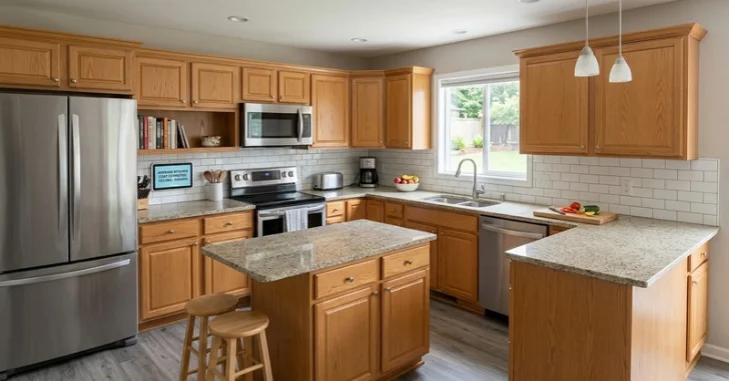
There is no single number that fits every homeowner. Fixr reports about $27,000 nationally, with a typical range of $15,000 to $45,000. Angi reports project costs spanning roughly $3,500 to $65,500, depending on the work involved.
Those numbers are useful starting points, but they measure different mixes of projects. A cabinet refresh should not share the same budget as a complete gut renovation. Define your scope before comparing your estimate with any national average.
Houzz’s Average Cost of Kitchen report offers another useful benchmark because it separates minor and major renovations. Completed major projects had a $55,000 median spend in its latest study. Minor projects had a $20,000 median spend.
Kitchen Renovation Costs by Project Scope
A cosmetic update focuses on appearance without rebuilding the room. You might repaint cabinets, change hardware, replace lighting, or install a new backsplash. These projects can sometimes remain near $5,000 to $15,000.
A midrange renovation replaces more visible and functional components. New cabinets, counters, flooring, appliances, sinks, and fixtures can push budgets toward $25,000 to $60,000. Keeping the layout unchanged can prevent several expensive trades from entering the project.
Major work can involve moving plumbing, changing electrical systems, removing walls, or expanding the room. These choices can put a project above $55,000 quickly. Custom cabinetry and premium appliances can move six-figure budgets into realistic territory.
How Kitchen Size Changes the Budget
Kitchen size matters, although square footage alone does not determine your bill. Angi lists roughly $75 to $250 per square foot for many projects. Materials and project complexity can move the final rate substantially.
A 100-square-foot room may therefore cost far less than a large open kitchen. Fixed expenses can make smaller rooms relatively expensive per square foot. Design fees, permits, delivery charges, and specialist labor do not always shrink with floor area.
Houzz also found a clear size effect among completed major projects. Major renovations below 250 square feet had a $46,000 median spend. Kitchens measuring at least 250 square feet reached a $75,000 median.
Where Your Remodeling Budget Goes
Cabinets can consume a large part of the available budget. Stock products usually cost less than semi-custom or fully custom work. Refacing sound cabinet boxes can also reduce replacement expenses.
Countertops create another wide price range. Laminate can support a tighter budget, while premium stone raises material and installation costs. Edge treatments, sink cutouts, backsplashes, and larger islands can increase the final quote.
Appliances deserve their own spending limit before you select finishes. A basic appliance package differs greatly from professional-style refrigeration and cooking equipment. Buying appliances early can also help your contractor plan electrical and cabinet dimensions.
Labor becomes especially important when several trades must coordinate. Plumbing, electrical, carpentry, flooring, painting, and installation may all appear on one project. Changing the existing layout usually increases both labor hours and scheduling complexity.
Why Moving the Layout Can Raise Costs
Keeping the existing footprint is one of the strongest budget-control decisions available. A sink that stays put may avoid major plumbing changes. An unchanged range location can reduce electrical or gas modifications.
Houzz found that 52% of renovating homeowners changed their kitchen layout. Yet 68% kept the room’s overall size about the same. That distinction shows why layout and square footage should be budgeted separately.
Wall removal can add structural engineering, framing, electrical, and finishing work. Moving plumbing can also expose unexpected conditions inside older walls. Ask contractors to separate these costs before approving a redesigned floor plan.
Build a Realistic Kitchen Budget
Start with the work you need rather than the finishes you want. Separate essential repairs from aesthetic upgrades. That approach protects important work when material selections begin consuming the budget.
Next, price the largest categories before choosing small decorative items. Cabinets, labor, countertops, and appliances usually deserve early attention. A beautiful faucet cannot rescue a budget already consumed by custom cabinetry.
Keep a contingency for conditions that appear after demolition. Older wiring, water damage, uneven floors, or plumbing problems may require repairs. Your contractor can suggest an appropriate allowance based on your home’s age and condition.
Propvyra’s Home Improvement & Value section is the most relevant place for related renovation guidance. Homeowners preparing to move can also review the Selling a Home section.
Is a Kitchen Renovation Worth the Cost?
Financial return depends heavily on how much work you complete. Zillow’s summary of the 2025 Cost vs. Value data reports different returns by project scope. Minor work performed much better nationally than major midrange or upscale projects.
The report placed a minor midrange project at $28,458 in average cost. Its estimated resale value contribution was $32,141, producing about 113% cost recoupment. A major midrange project recouped about 51% nationally.
That does not mean every small renovation creates a guaranteed profit. Local property values, buyer expectations, workmanship, and timing can change the result. Personal enjoyment may also matter more if you plan to remain home for years.
Ways to Reduce Kitchen Renovation Costs
The easiest savings often come from reducing project scope before construction begins. Keeping the existing footprint can prevent expensive plumbing and structural changes. Reusing sound elements can also free money for higher-priority upgrades.
Consider these budget-saving options:
- Keep the sink and major appliances in their current locations.
- Refinish or reface usable cabinet boxes.
- Compare stock and semi-custom cabinet options.
- Choose standard countertop edges and common slab sizes.
- Set appliance limits before visiting showrooms.
- Request detailed bids from several qualified contractors.
- Separate optional upgrades from necessary work.
- Avoid changing specifications after construction begins.
The cheapest bid is not automatically the least expensive project. Missing scope can return later through change orders. Compare what each contractor includes before comparing the bottom-line price.
How Much Should You Set Aside?
A homeowner planning a straightforward midrange project could begin with a $25,000 to $60,000 working range. That figure aligns with several current national pricing guides. Local labor costs and material choices still require a property-specific estimate.
A major project deserves a larger planning number from the beginning. Houzz’s $55,000 median provides a useful reference for major completed renovations. Larger major projects reached a $75,000 median in the same study.
Before signing a contract, create a line-item budget and obtain multiple local estimates. Confirm allowances, exclusions, permits, demolition, and cleanup in writing. That process gives you a stronger estimate than any national average can provide.
Plan the Project Around Scope, Not One Average
National averages provide a starting point, not a final construction budget. A $15,000 refresh and an $80,000 redesign solve different problems. Comparing them as one category can create unrealistic expectations.
Decide which parts of your existing kitchen must change first. Then collect local bids using the same written scope. You will get a far more reliable budget and fewer surprises once work begins.
Frequently Asked Questions
What is the average cost of kitchen remodel projects in the U.S.?
Many typical projects fall around $15,000 to $45,000, while more extensive work can cost much more. Fixr lists a national average near $27,000. Houzz reports higher median spending when major projects are considered separately.
How much does a 200-square-foot kitchen renovation cost?
Angi’s 2026 guide estimates roughly $15,000 to $50,000 for a 200-square-foot project. Materials and scope can push the total outside that range. Moving plumbing or selecting premium cabinetry can increase costs quickly.
What is the most expensive part of a kitchen renovation?
Cabinetry is often among the largest individual expenses. Custom products cost much more than stock alternatives. Labor, appliances, and countertops can also become major line items.
Can I remodel a kitchen for $20,000?
A $20,000 budget can support a limited or minor renovation in many markets. Houzz reported a $20,000 median for minor completed projects. Keeping the layout and reusing suitable materials can make that budget more workable.
Does a kitchen renovation increase home value?
It can improve resale appeal, but spending does not translate dollar-for-dollar into value. Smaller projects produced stronger national cost recovery in 2025 Cost vs. Value data. Your local market and existing home condition still matter.
—